
How to Search Sibley County Civil Dockets
Minnesota Court Records Online is the natural first stop for a public Sibley County civil docket. Its short name is MCRO. Accept the portal terms first. Then choose Case Search and pick Sibley from the county list. A party name can surface a likely case. A full case number is safer whenever you have it. MCRO costs nothing for public records you reach remotely. Keep in mind that its display is unofficial. It does not create a certified court copy of anything.
Search with the narrowest details you actually know. Compare the case category, filing date, party role, location, and status on screen before trusting a result as the right civil matter. If a name search misses, try spelling and middle-name variations. A trailing asterisk broadens a name after two characters. The Sounds Like option cannot be combined with that wildcard. A document may be missing, or you may need an official judgment. Contact Sibley Court Administration then instead of assuming the online result is complete.
- Open MCRO, accept its terms, and choose the Name or Case Number search mode.
- Select Sibley County from the specific county locations and select Civil when a category filter will help.
- Enter the party name or full civil case number, then use Find to return the possible cases.
- Open the matching public case detail and record the complete number, case title, status, and relevant event date.
- Use Document Search for eligible documents or ask Court Administration for a plain, certified, or exemplified copy.
Note: A public online result is only a research lead. The court must confirm any detail that has to be official.
Sibley County Civil Case Codes
Sibley County case numbers carry the county code 72. Per the Judicial Branch, a Minnesota file number usually blends a two-digit county code and a case-type abbreviation. It also includes a two-digit filing year and a sequence number. One civil format you may see is 72-CV-26-63. Those CV letters mark the civil lane. The live case category and full case detail still control what the case actually is, though.
Conciliation numbers keep the same county code. They may show CO instead, as in 72-CO-25-114. Treat both formats as recognition aids. They are not a complete list of every historical case code. A citation number is a different animal. Never alter one to look like a civil court number. When a number needs decoding, the Judicial Branch's case-number explanation is the better source.
What a Civil Docket Shows
Rule 8 describes a register of actions as a case-by-case list. It covers a case's origination, activities, proceedings, and filings. A public civil MCRO result can display case information, party and attorney details, related cases, events, hearings, dispositions, financial information, and any public documents. One docket entry records an event. It is not the underlying filing, and it is not a finding about an allegation.
| Case number | The Sibley identifier, such as 72-CV-26-63, with case type and filing year. |
|---|---|
| Case information | Title, category, filing date, court location, judicial officer, status, flags, and related cases where shown. |
| Parties and events | Party roles, attorneys, dated filings, motions, notices, and other listed court activity. |
| Hearings and dispositions | Scheduled or completed hearings and any public disposition information, which should be read with later events. |
| Documents and financials | Public document links when eligible, plus judgment or satisfaction information where the portal displays it. |
The Judicial Branch case-details handout walks through each display area. Check a document's caption, date, and any redaction notice before reading it as part of the civil record.
Sibley County Conciliation Dockets
Conciliation Court is Minnesota's small-claims division of District Court. It is not a separate Sibley courthouse or city court. The local directory routes conciliation questions to (507) 237-4300. The case itself is searchable through MCRO by full number or party name. A conciliation docket may show a hearing, judgment, and later satisfaction. Its filing path and appeal rules, though, can differ from a general civil case.
Minnesota Statutes Chapter 491A supplies the framework. It sets a general conciliation limit of $20,000. A lower $4,000 limit applies to consumer-credit claims, subject to the statute's exceptions and current terms. The district court case category helps here. The event history helps too. Together they tell a conciliation judgment from another civil judgment. For a certified judgment, go to Court Administration. The free online display will not do.
The conciliation-court statute is the page the official record rests on. Its jurisdiction rules explain why a Sibley County conciliation docket still lives inside the District Court record system.
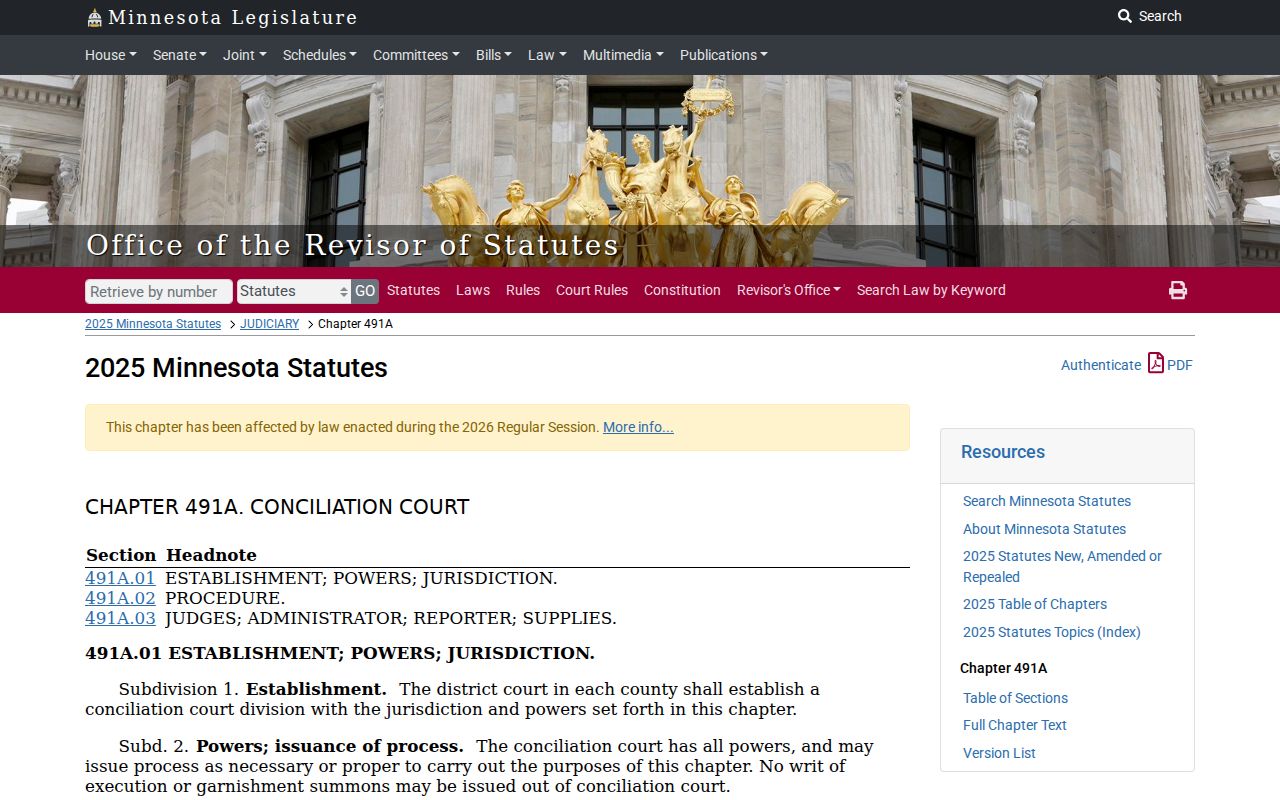
The statute backs up the local routing point: the case type changes the procedure, not the courthouse that keeps the Sibley court file.
Note: A conciliation hearing is a scheduled court event, not proof that a judgment exists or is still enforceable.
Civil Cases on the Docket
Sibley County District Court holds original jurisdiction over civil, family, probate, juvenile, criminal, and traffic matters. So a civil search needs two things. One is the number prefix. The other is the category shown in MCRO. The public record may identify a civil claim, a conciliation case, a family matter, or another category. Document access, however, is not identical across those categories.
- General civil matters shown with a CV case-type prefix.
- Conciliation matters, commonly called small claims, shown with a CO prefix.
- Family cases, often shown with an FA prefix and narrower remote document access.
- Probate, guardianship, conservatorship, and trust matters in the District Court system.
- Public judgments and related satisfaction entries that can also appear in Judgment Search.
Handle family, domestic-abuse, harassment, juvenile, civil-commitment, and protected records with added care. A category or docket line can be public while an attachment stays confidential, sealed, or blocked from remote viewing.
Sibley County Judgment Search
Start in MCRO Judgment Search. Use it when you know the judgment debtor but not the case number. Pick the debtor name type. Narrow the docketed date or status if that helps. Then select Sibley County. From each match, note the case number, the parties, the docketed date, the judgment details, and any satisfaction listed. The result points back to the case. It is not the full civil history on its own.
The official MCRO materials note a split worth remembering. Judgment Details may highlight the most recent monetary award. Case Details carries the broader record. A satisfaction entry only shows that a satisfaction was recorded. Renewal, interest, appeal, and later filings may still need checking. For an official result, request a certified judgment or register from Court Administration. Once the number is in hand, the Sibley County case search route can help you pull the full case.
Civil Docket Settings and Hearings
A Sibley County civil docket can show many settings. The usual ones are status conference, motion hearing, default hearing, conciliation hearing, pre-trial, and Motion Summary Judgment. Each label names a procedural step. None of them is a ruling on the dispute itself. The local daily calendar lists party name, hearing location, date and time, judicial officer, and case number. It also gives hearing type and connection type. Treat it as a schedule, not a full register of actions.
The Sibley court calendar posts a next-day PDF around 7 p.m. During business hours it is updated hourly from 7 a.m. A missing row does not prove a cancellation. Confidential or non-remotely accessible hearings stay off the list. If a setting may have moved, rely on the hearing notice. Court Administration is safer than an older calendar page.
Note: A motion listing means a motion is set or recorded. It does not mean the court granted it.
Sibley County Civil Document Access
MCRO Document Search needs the complete case number. Enter it, and eligible public documents come back by document index. A missing image has several possible causes. The filing may predate remote coverage. It may be restricted by case type or security code. It may be sealed, confidential, or simply not among the documents published remotely. Give Court Administration the event date, description, filing date, and index number. That way your request can be answered precisely.
For many major and minor civil cases, public documents fall within remote coverage if filed on or after July 1, 2015. Material from earlier years is more limited. Not every civil attachment becomes a remote record. When MCRO does not put a public document online, the next channel is in-person inspection. A written copy request works too.
The Rules of Public Access overview sets the state framework for these boundaries.
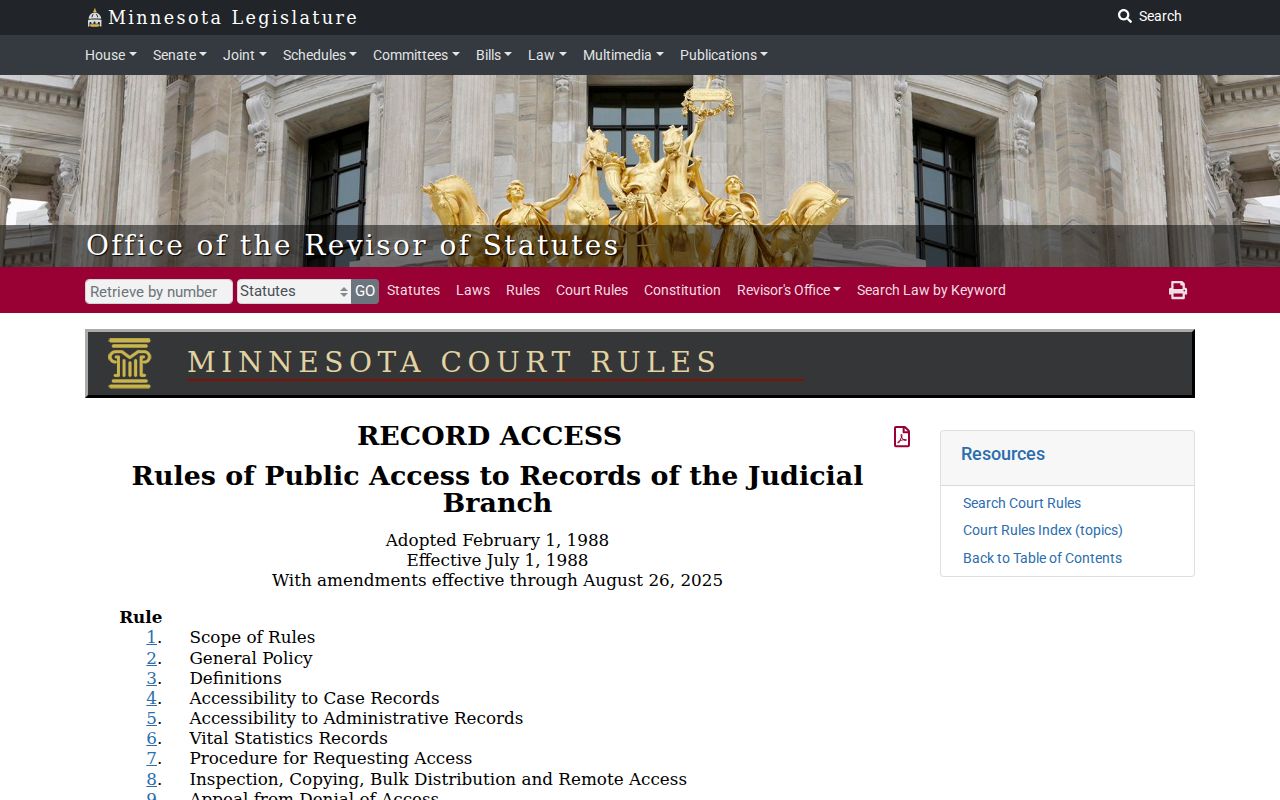
Access under those rules turns on the record and how it is classified. A public case number alone does not make every filing open.
Public Access to Civil Dockets
Public access to Sibley County court records rests on the Rules of Public Access to Records of the Judicial Branch. Rule 8 permits inspection and copying of public original records where they are normally kept, during working hours, subject to security and practical-format limits. The same rule recognizes that a register of actions summarizes case activity without holding every paper in the file.
Public-access rule: Rule 8 supports access to public original records and defines the register of actions. Minnesota Statutes § 13.90 directs judicial-branch access questions to the Supreme Court's separate rules.
A public caption does not open every field or exhibit. Protected addresses, medical material, financial account numbers, juvenile information, and other restricted data can be redacted or withheld. The judicial-branch data statute is one reason a court-file request should identify the precise public record sought.
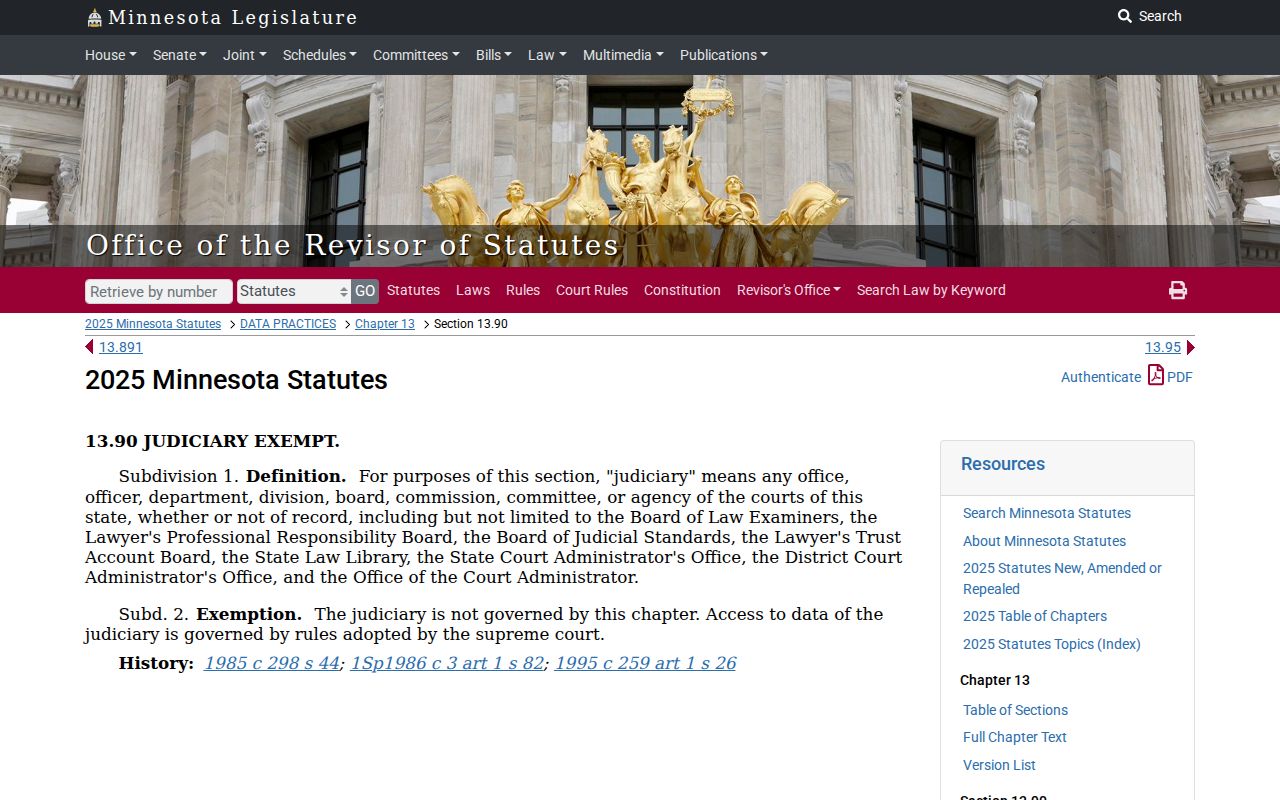
That statute ties a Sibley County civil docket request to court-access rules that stand apart from other record laws. Judicial records follow their own framework.
Sibley County Civil Court Calls
When the online civil docket leaves a practical question open, call the right desk. Sibley Court Administration lists Civil and Family at (507) 237-4058. Conciliation sits at (507) 237-4300. The main court number is (507) 237-4051. Ask whether the file is public, on site, or archived. Ask, too, about a plain, certified, or exemplified copy. The current court email pathway can answer procedural routing questions.
Mail a civil-copy request to Sibley County District Court, Court Administration, PO Box 867, 400 Court Avenue, Gaylord, MN 55334. The official Sibley pages show differing fax numbers. Confirm the current fax route by phone first. Minnesota eFile and eServe handles authorized filing and service, not public browsing. For record access, MCRO and Court Administration remain the routes.
District Court's civil jurisdiction comes from Minnesota Statutes § 484.01. A federal civil matter belongs elsewhere. That goes to the U.S. District Court for the District of Minnesota and PACER instead. The local court is the right contact for a Sibley case number beginning with 72.
The District Court jurisdiction statute supplies the state-law foundation for the Sibley civil record route.
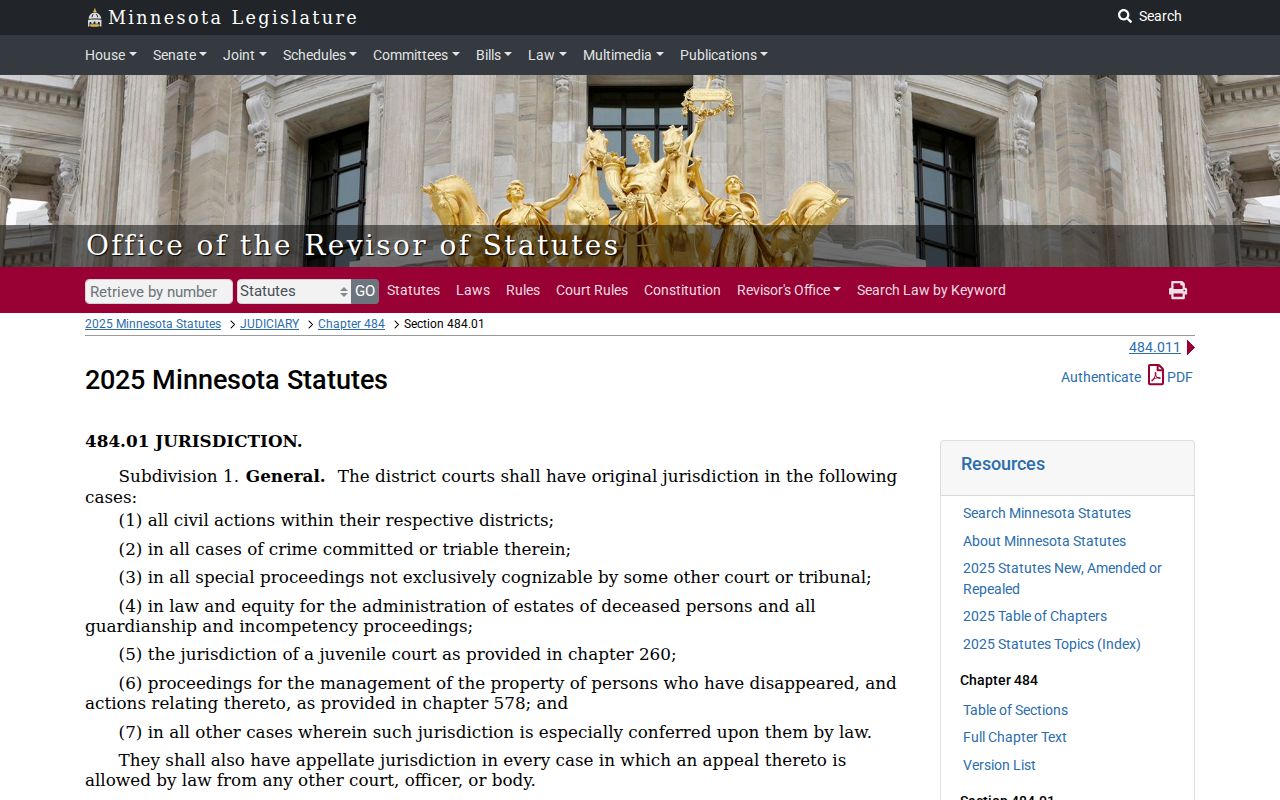
That jurisdiction statute helps separate a Sibley District Court civil docket from a federal court record. Minnesota Statutes § 13.84 adds a caution: court-services data may be private or confidential.
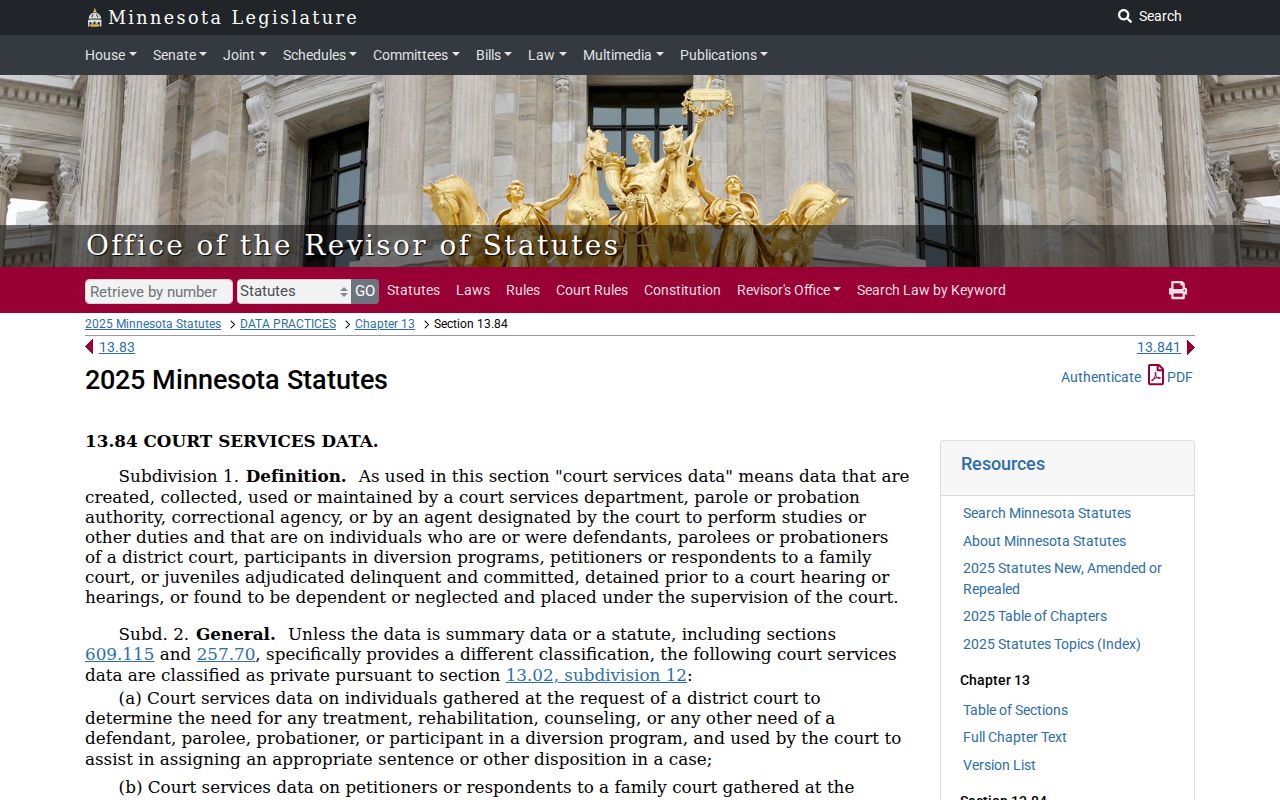
The court-services statute is a reminder to ask the clerk for the lawful public portion of a civil-related record rather than presume all related information is open.
Note: The court can explain access procedures, but it cannot advise a requester about the legal effect of a civil filing.